IFRA 标准图书馆
IFRA
Standards Library
03/02/2026
On 29 January 2026, the International Fragrance Association (IFRA) organised the 7th Review Meeting of the International Dialogue for the Evaluation of Allergens (IDEA) in Brussels.
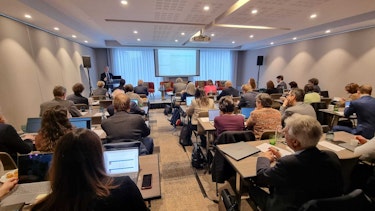
Since its launch in 2013, the IDEA initiative has provided an important international platform to support scientific progress in fragrance allergen evaluation. The annual review meetings bring together experts and stakeholders to share developments across key workstreams, discuss priorities, and strengthen collaboration in the field of consumer safety.
The 2026 meeting gathered representatives from the fragrance industry and downstream user sectors, dermatologists, academia, non-governmental organisations, and EU institutions, including ECHA, the European Commission, and the European Parliament, as well as observers from the Scientific Committee on Consumer Safety (SCCS).
A central focus of the meeting was the continued progress towards integrating non-animal scientific tools, known as New Approach Methodologies (NAMs), into the fragrance industry’s Quantitative Risk Assessment (QRA) framework for skin sensitisation.
Participants also discussed advances in consumer exposure science, including the Creme-RIFM aggregate exposure model, and received an update on the multi-year clinical surveillance project established under IDEA to monitor fragrance allergy trends across the population.
Matthias Vey, Vice President of Scientific Affairs at IFRA, highlighted the importance of scientific collaboration in driving innovation saying, “The IDEA programme reflects IFRA’s long-term commitment to advancing robust, science-based approaches to fragrance skin allergen risk assessment. By working with regulators, dermatologists, and other stakeholders, we are accelerating the integration of non-animal methods while continuing to ensure the highest standards of consumer safety”.
IFRA remains committed to supporting innovation, transparency, and global cooperation in fragrance safety assessment, contributing to the transition towards modern, non-animal scientific methodologies.


