IFRA Standards Library
IFRA
Standards Library
20/08/2026
Representatives of the International Fragrance Association (IFRA) met the General Management of Cosmetics and Sanitizers (GGCOS) of Brazil’s National Health Surveillance Agency (ANVISA) on 17 – 18 August 2026 for two days of technical exchange on fragrance safety assessment and risk-based product management.
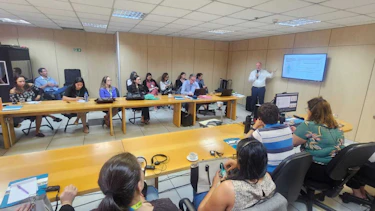
The meeting brought scientific, regulatory and industry perspectives into the same room, on the premise that good regulation rests on a shared understanding of the evidence.
Day one opened with a hands-on olfactory session, giving participants direct experience of individual fragrance ingredients and of how those ingredients come together in finished consumer products. It set the practical ground for the discussions that followed.
Day two turned to the science. A technical workshop on fragrance safety assessment and risk-based product management was led by Matthias Vey, IFRA Vice President for Scientific Affairs. Mr Vey walked participants through the IFRA Standards — the association's system of restrictions, prohibitions and specifications for fragrance ingredients — as well as safety assessment methodologies and exposure science.
His presentation also set out the joint safety assessment process operated by IFRA and the Research Institute for Fragrance Materials (RIFM), which underpins the evidence base for the IFRA Standards.
Alexander Mohr, IFRA President, and Eduardo Valle, IFRA Senior Regional Manager for Latin America, also took part in the two days. Mr Mohr and Mr Valle were joined by representatives of three Brazilian industry associations: ABIFRA (Associação Brasileira das Indústrias de Óleos Essenciais, Químicos Aromáticos, Fragrâncias, Aromas), ABIHPEC (Associação Brasileira da Indústria de Higiene Pessoal, Perfumaria e Cosméticos) and ABIPLA (Associação Brasileira das Indústrias de Produtos de Higiene, Limpeza e Saneantes).
Between them, the participants covered the ingredient manufacturers who create fragrance materials, the personal care and cleaning product companies that use them, and the regulators responsible for overseeing both.
IFRA thanked ANVISA and GGCOS for the openness and rigor of the exchange, and all those who made the two days possible.
Dialogue of this kind is how consumer protection and innovation move forward together. IFRA remains available to contribute science-based input wherever it is useful to Brazil's regulatory community.


